Raman Calibration and Performance Verification
Correct calibration and periodic verification of Raman instruments are essential for maintaining reliable system performance and ensuring that spectra remain comparable across instruments and over time.
This is particularly important when Raman data is used in scientific publications, quality control, material identification or long-term studies, where accuracy, consistency and traceability matter. Even minor instrumental drift can affect peak position, intensity, spectral resolution or baseline behaviour, potentially introducing errors into data interpretation.
ELODIZ has developed a range of Raman Certified reference materials to support routine Raman instrument performance verification. Our materials help users confirm that their Raman data remains consistent, standards-aligned and publication-ready. They support verification workflows aligned with relevant ASTM and CEN-CENELEC standards and EU CHARISMA protocols. (read more about it here).
Why It Matters:
- Confirms that your Raman instrument is performing as expected
- Detects and monitors instrumental drift
- Supports verification of peak position, spectral resolution and intensity response
- Enables consistent comparison of data between instruments
- Supports reliable datasets for publication and future reference
Raman Certified reference materials kit
Our Raman Certified reference materials are available individually or as a complete kit. The complete kit is supplied in a durable wooden box for safe, organised storage and professional handling.
The materials can be used for routine performance checks, instrument comparison, quality assurance procedures and monitoring instrument behaviour over time.
Intensity correction light source
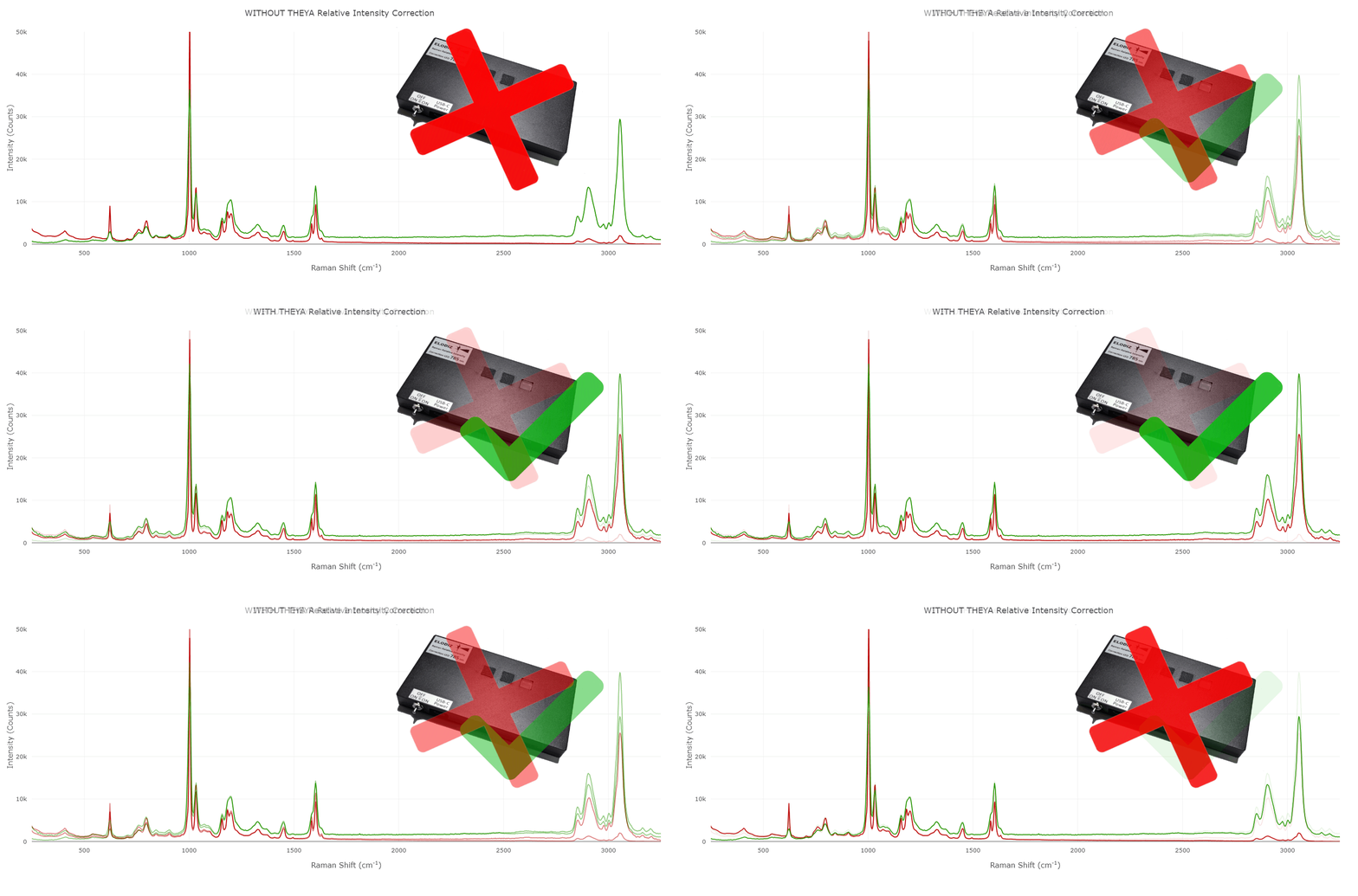
We also offer Raman intensity correction LED and NEON light sources, suitable for calibration and verification workflows.
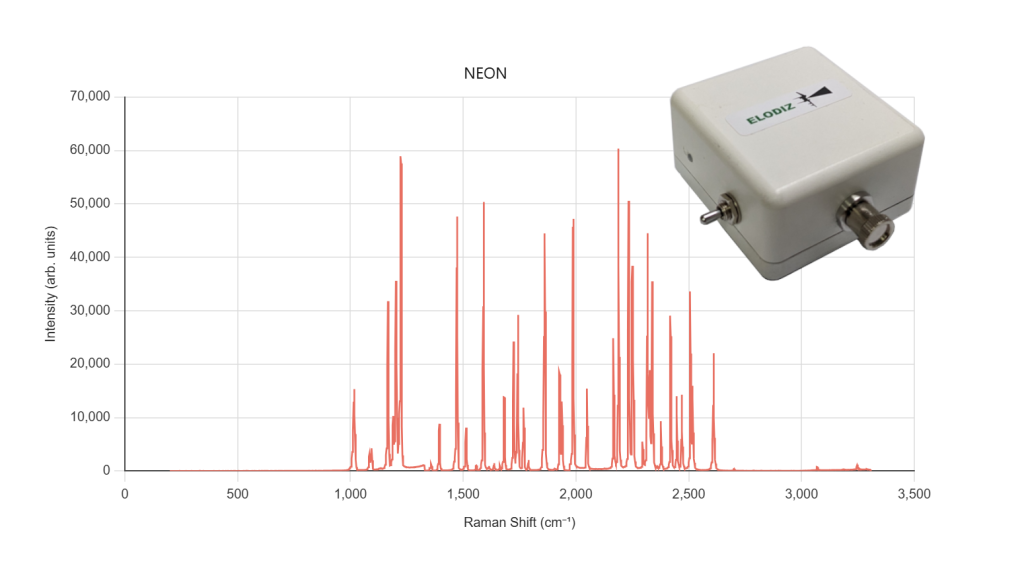
THEYA RIC LED supports correction and verification of the wavelength-dependent intensity response of Raman instruments, while THEYA Neon provides stable neon emission lines for wavelength calibration and verification of spectrometer resolution.
Together, our Raman Certified reference materials and calibration light sources provide practical tools for supporting accurate, consistent and comparable Raman measurements.
You can read more about them here.
For more information, please contact: info@elodiz.com
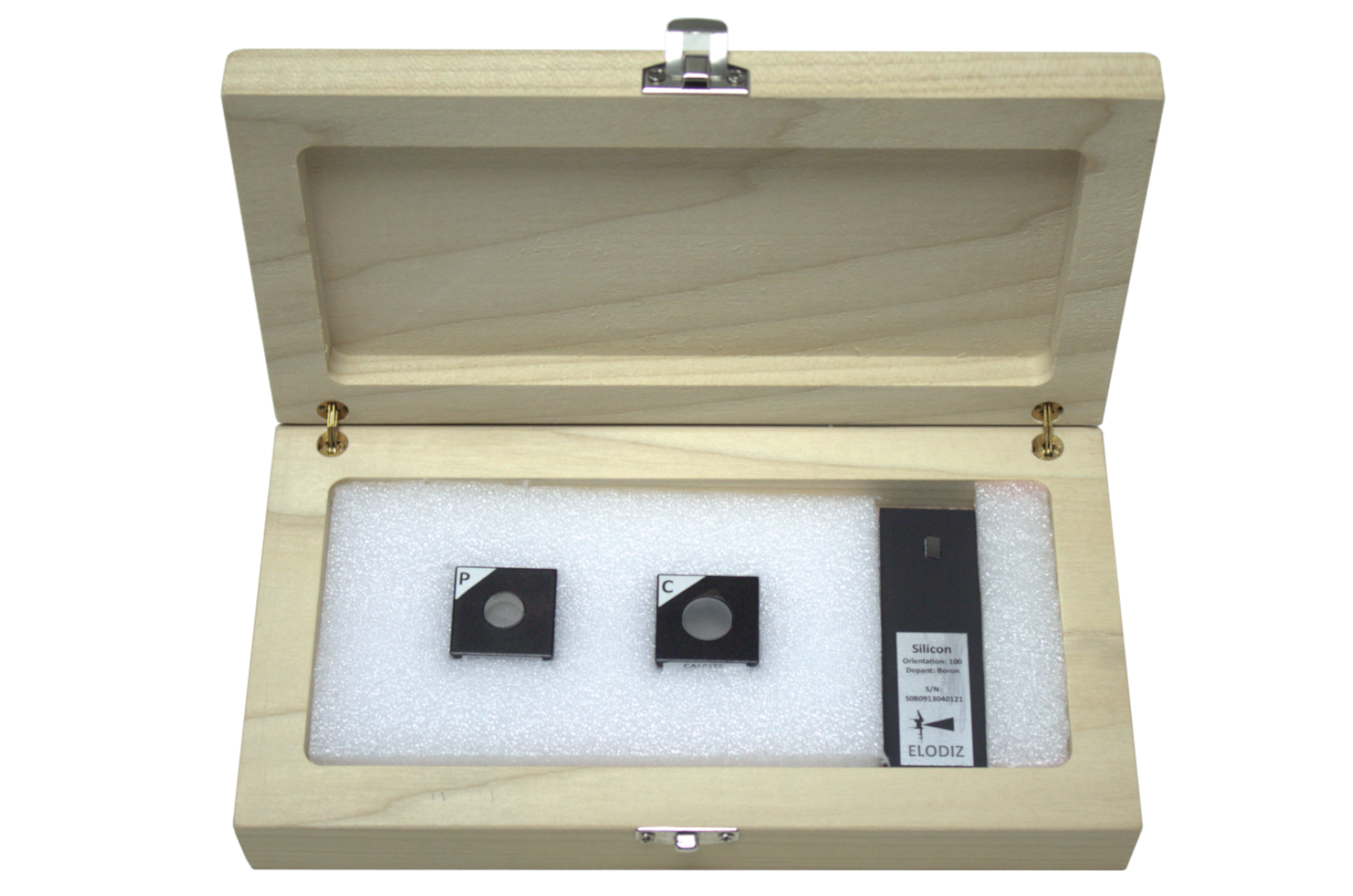
Raman Certified Calibration Kit
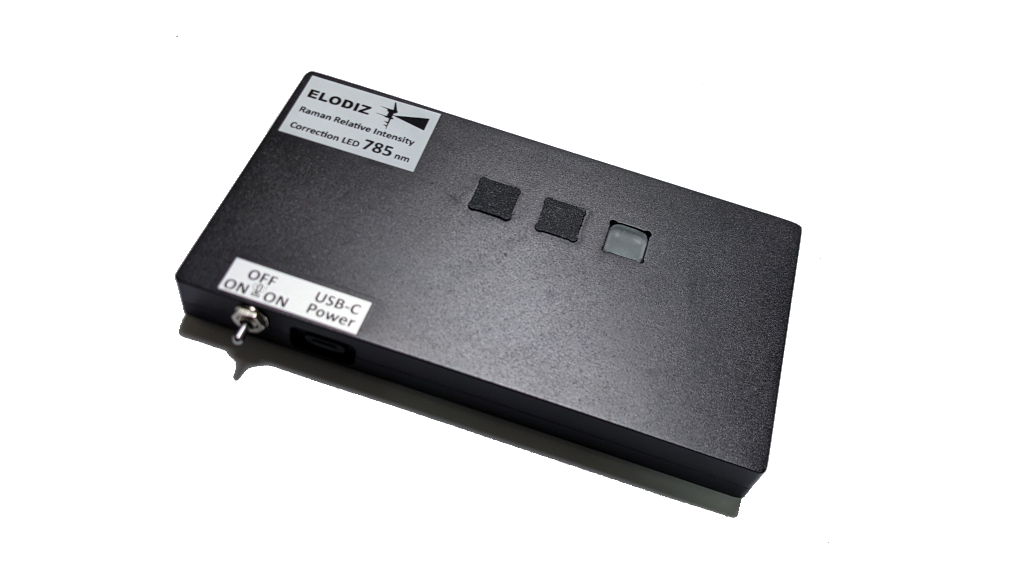
THEYA™ RIC LED
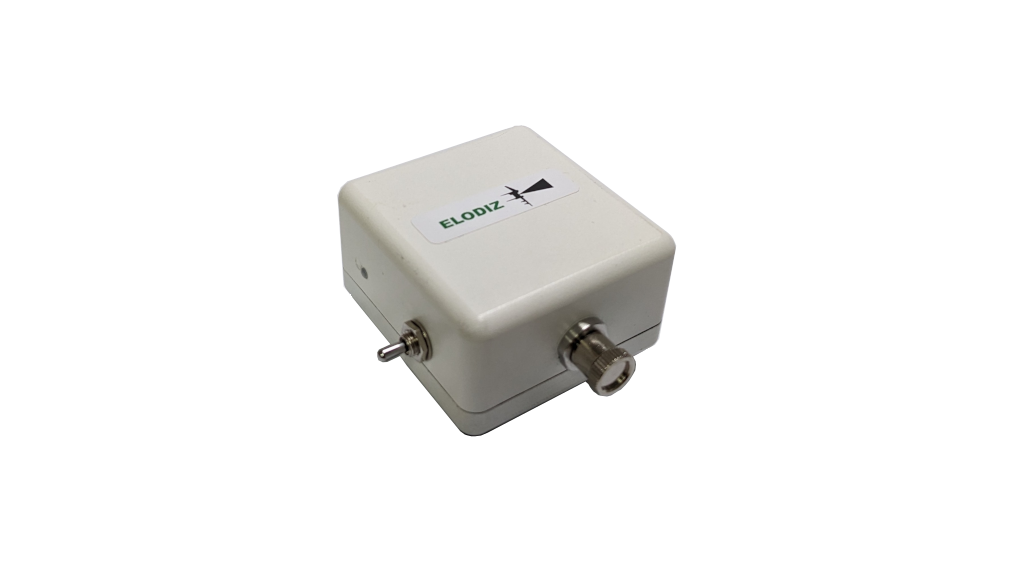
THEYA™ NEON
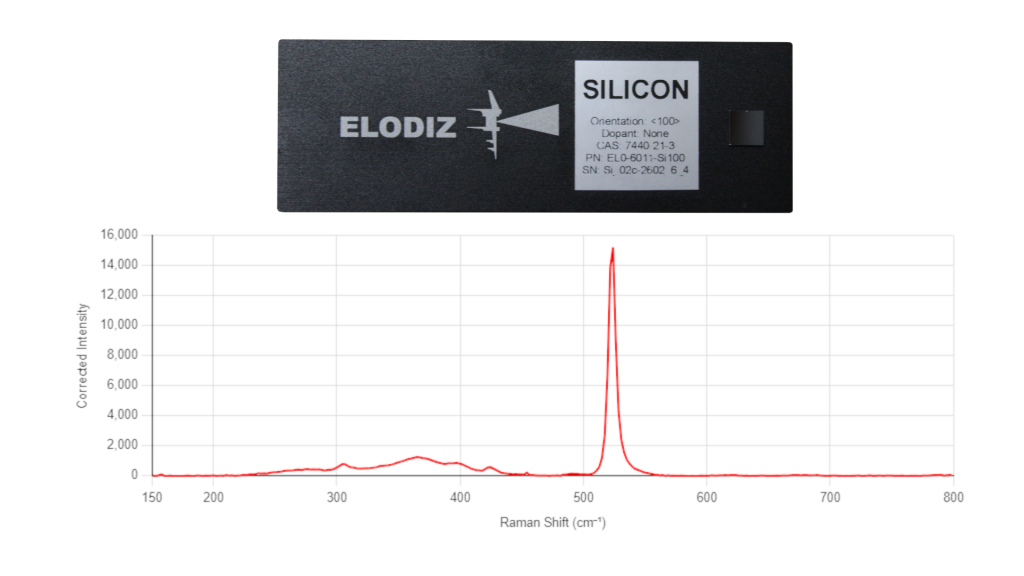
SILICON
When Raman data needs to be comparable between instruments, across sites or over time, your Raman shift axis must remain stable. A silicon reference provides a rapid, repeatable check using a distinctive band that is easy to identify and fit, allowing you to spot drift early and correct issues before they affect measurements. Minor variations in peak shape may occur depending on dopants or surface morphology.
Silicon is also commonly used at the start of a session to confirm that the system is correctly set up and ready to measure.
What it’s used for
- Laser zeroing/ Raman shift axis check.
- Routine verification.
- Post change validation after switching gratings/objectives or after service/transportation.
- Troubleshooting when peak positions or library matches look “off”.
To learn more about the benefits of using Silicon in Raman spectrometer calibration please read more here.
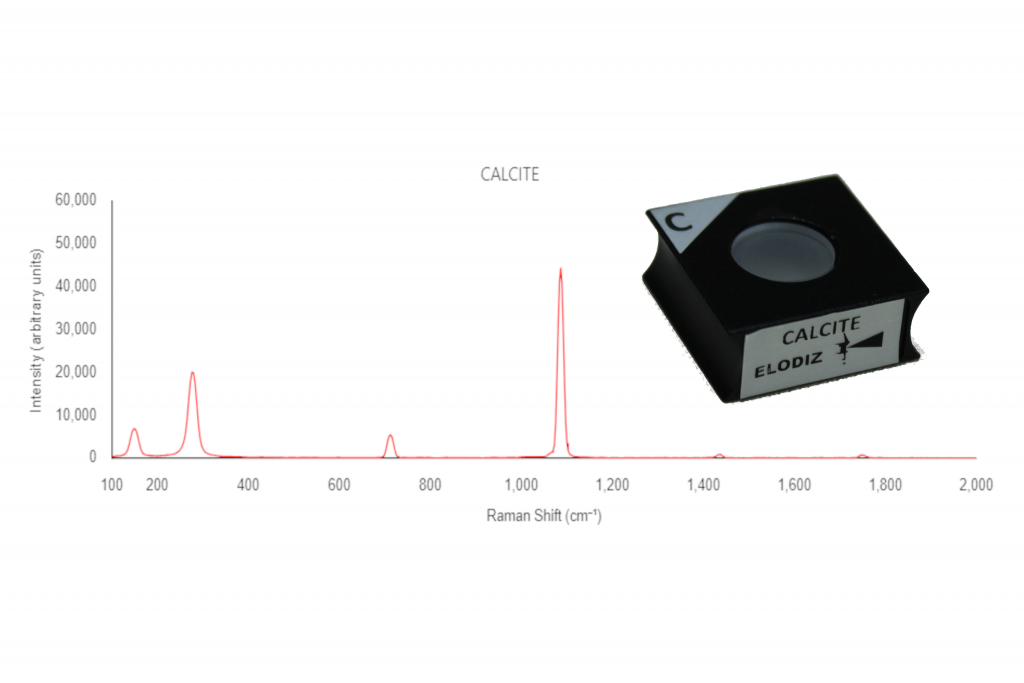
CALCITE
Calcite is references in ASTM E2529 as a practical reference material for routine testing of Raman spectral resolution and instrument line shape using a calibrated Raman band. In other words, it helps you confirm how sharply your spectrometer can resolve spectral features and whether the system is behaving as expected after changes, servicing or time in use.
Resolution is critical for interoperability of Raman spectra between different instruments and configurations, especially when spectra are transferred between systems, when different sampling accessories are used or when a Raman system can operate at more than one excitation wavelength. A small change in resolution can subtly alter peak widths, shoulder visibility and band shapes, leading to misinterpretation, reduced discrimination or less reliable library matching.
Why Calcite is such a good standard
ASTM E2529 describes routine resolution assessment using either low-pressure lamp emission lines or a calibrated Raman band of calcite. Using a Raman band is very practical approach because it tests the system in a way that’s closer to real measurements, helping you capture resolution behaviour as it appears in Raman spectra.
Calcite is highlighted a as naturally occurring mineral with many of the optical characteristics desirable for a Raman resolution standard and is described as inexpensive, safe and readily available. That makes it ideal for routine verification programs where repeatability and ease of use matter.
Calcite is a great choice when you need a fast, defensible resolution check, for example:
- After changing objective lenses, gratings or resolution settings
- After service, transport or alignment adjustments
- As part of routine verification schedule to monitor stability over time
- When you need stronger confidence in inter instrument comparability
POLYSTYRENE
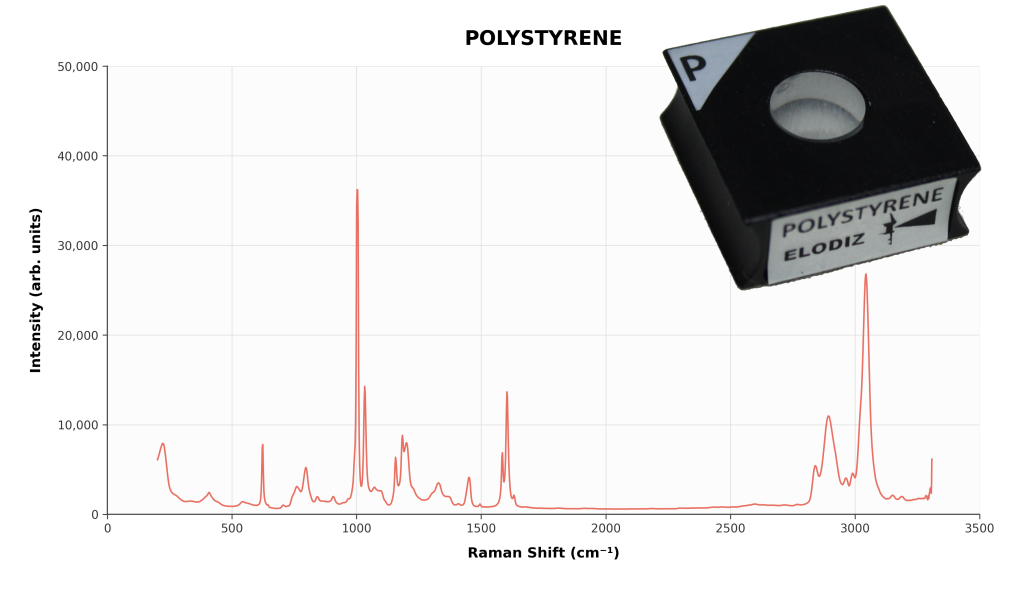
Polystyrene is one for the most widely adopted practical reference materials for Raman shift (wavenumber) verification. It is specifically references in ASTM E1840, a standard guide that provides reliable Raman shift values for calibration use.
A key advantage is that polystyrene provides multiple distinct Raman peaks across the spectrum, allowing you to verify the x-axis at several points rather than relying on a single line. ASTM E1840 includes Raman shift values for a set of peaks, supporting a thorough validation approach.
In pharmaceutical environments, instrument performance checks are typically formalised. The European Pharmacopoeia explicitly describes verification of the Raman wavenumber scale using suitable standards such as polystyrene and recommends selecting a minim of three shifts spanning the working range. In the US context, Raman instrument qualification guidance often references the use of recognised standards and routines tied to ASTM methods, including ASTM E1840 for x-axis calibration
What it’s used for
- Raman shift/ wavenumber verification
- Linearity checks
- Routine periodic verification
- Pre measurement confidence checks
- Troubleshooting
NEON
A compact and reliable wavelength calibration source for spectroscopy.
ELODIZ THEYA Neon provides clean, stable neon emission lines across an approximate wavelength range of 500 to 1000 nm. Designed for easy integration with compatible spectrometers, it supports routine wavelength calibration and verification of spectrometer resolution.
The emission lines can be referenced against NIST emission data to support consistent and reproducible measurements. THEYA Neon is USB-C powered and is available with SMA 905 or FC fibre-coupled output, making it suitable for laboratory, production, and portable spectroscopy applications.
Key features
- Compact and lightweight design
- Convenient USB-C power connection
- Clean and stable neon emission lines
- Excellent stability during short and long exposure times
- Approximate wavelength range of 500 to 1000 nm
- Available with SMA 905 or FC fibre-coupled output
- Compatible with the ELODIZ 90-degree mirror accessory
- Suitable for wavelength calibration and spectrometer resolution verification
- Excellent performance-to-cost ratio
For product information, technical support, or purchasing enquiries, please contact info@elodiz.com.